
In temperature-critical systems, the chemistry of a product can have a huge impact on the output of the system itself. Antifreeze formulations underpin reliability across automotive, industrial, and aerospace applications, ensuring consistent operation even under thermal extremes. Among the compounds engineered for freeze protection, ethylene glycol (C₂H₆O₂) remains the preferred base fluid, valued for its balance of thermodynamic efficiency, stability, and cost-effectiveness.
This article explores why ethylene glycol continues to lead antifreeze innovation, and how Arrow’s chemistry leverages its properties to deliver dependable performance, particularly in products like Antifreeze (coolant) and De-icers.

Ethylene glycol
(C₂H₆O₂) ensures reliable
performance in sub-zero
conditions
Dilution ratios impact
freezing point

Reliable cold-weather
protection
Table of Contents
What Is Ethylene Glycol?
Ethylene glycol is a colourless, odourless diol compound. Chemically, it is an alcohol containing two hydroxyl (–OH) groups. When blended with water, it lowers the freezing point and raises the boiling point of the solution, creating a broader operational temperature range and ensuring that systems neither freeze nor overheat under fluctuating conditions, a property essential for engines, HVAC systems, and de-icing equipment.
Recent studies, such as those by Jiang (2023) and Thermtest (2018), confirm the compound’s favourable thermal conductivity and predictable viscosity profile, making it one of the most efficient base fluids for long-term thermal management in industrial systems.
Why Ethylene Glycol remains the preferred antifreeze base
Superior thermal transfer
Ethylene glycol (EG) demonstrates a high specific heat capacity and relatively low viscosity. These attributes allow it to circulate efficiently and maintain consistent temperature distribution. This means it exhibits excellent heat transfer properties. Laboratory measurements (Thermtest, 2018) show that EG–water mixtures outperform propylene glycol (C₃H₈O₂), another common antifreeze, in both thermal conductivity and heat transfer stability, especially under high-load operation.
By comparison, propylene glycol’s higher viscosity can hinder flow rate and reduce heat exchange efficiency, a crucial factor in high-performance or industrial systems.
Effective freeze point depression
A 60/40 mixture of ethylene glycol and water can achieve a freezing point as low as −45°C, as verified in multiple thermophysical studies. This makes it highly effective in cold-chain logistics, aerospace cooling loops, and polar environments, where other solutions risk crystallisation or phase separation. The mixture’s stability curve (well documented in ASME and ASTM datasets) underlines why EG remains the base chemistry of choice for precision-engineered antifreeze.
Proven cost-performance ratio
Compared with alternative glycols, ethylene glycol offers a higher performance-to-cost ratio. Less volume is required to reach target freeze protection levels, leading to lower overall formulation and operational costs. Industrial trials (Al-Amayreh, 2020) highlight its superior consistency under repeated thermal cycling, translating to fewer maintenance intervals and lower system wear. This leads to cost savings for both consumers and industries alike.
Proven track record
Decades of deployment have shown ethylene glycol’s chemical stability and corrosion control potential (when combined with appropriate inhibitor systems). ASME-verified research (2025) notes that its conductivity and degradation profile remain remarkably stable across extended service intervals, making it an ideal foundation for both commercial and industrial antifreeze solutions, and a trusted choice for manufacturers and consumers.
Arrow’s formulation expertise
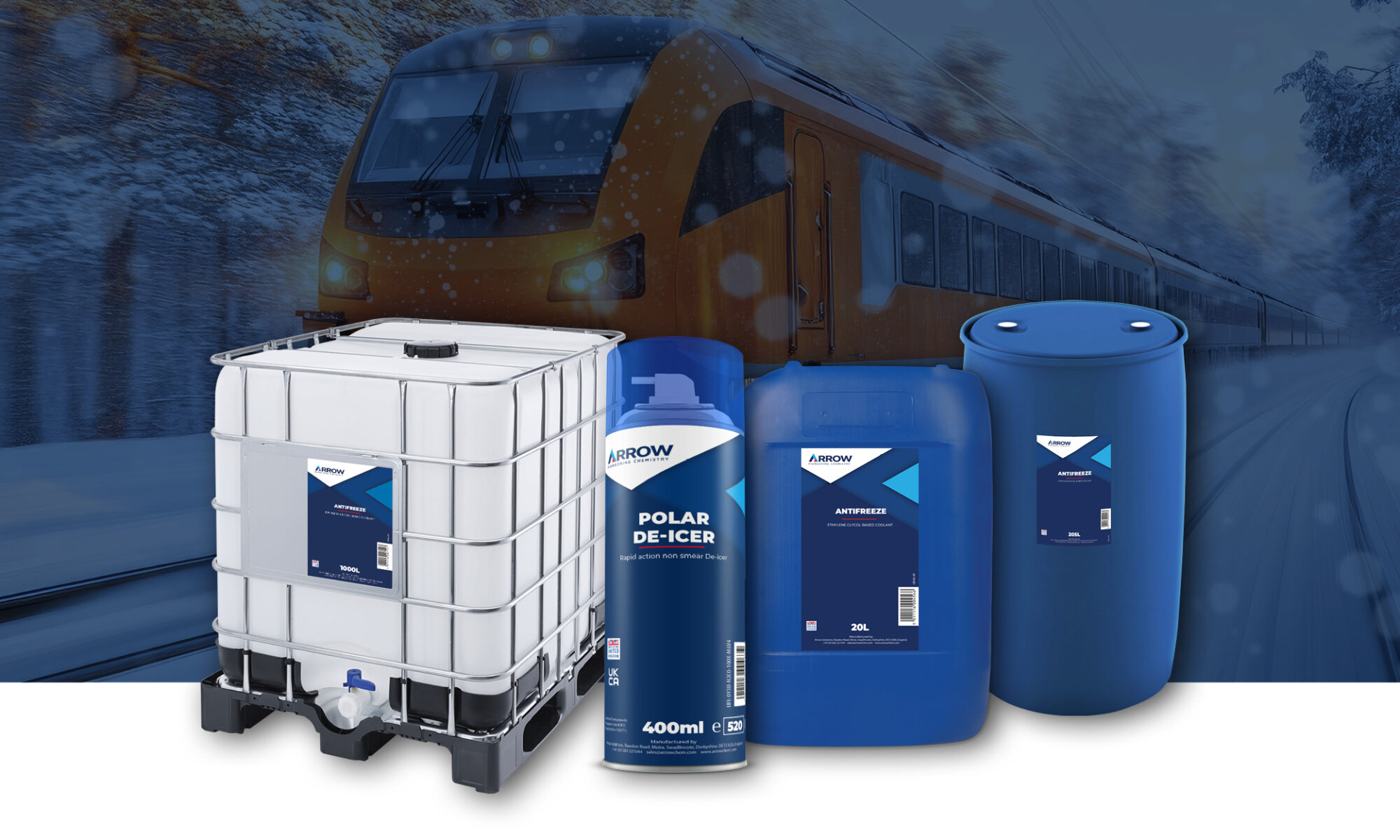
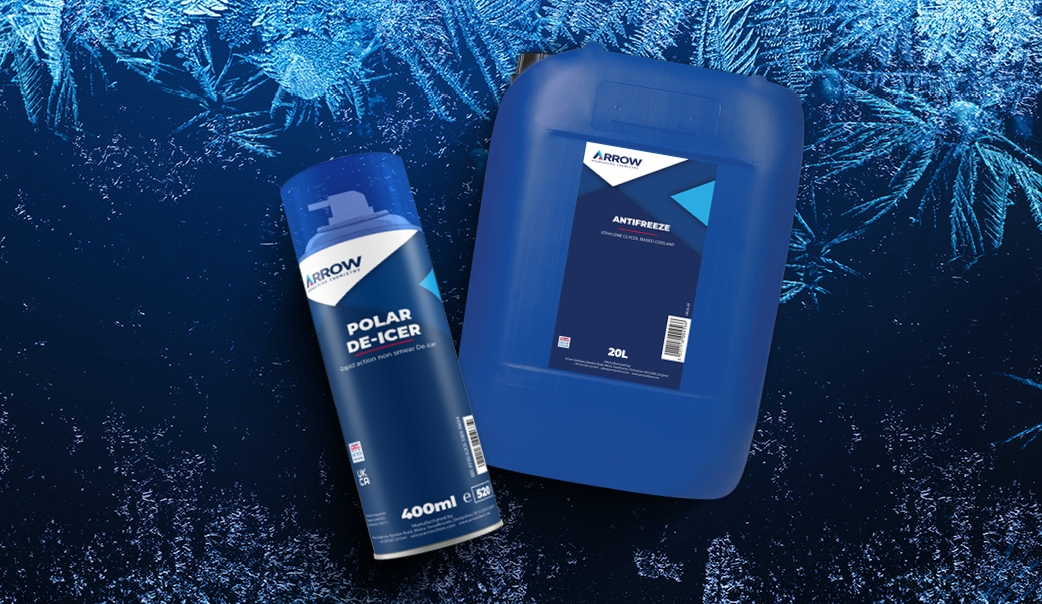
At Arrow, we engineer our products to leverage ethylene glycol to deliver high-performance solutions. Our Antifreeze and Polar De-Icer ranges combine high-purity glycol with advanced additive systems, including corrosion inhibitors, pH stabilisers, and anti-foaming agents. These products are designed to meet the demanding needs of various industries, providing reliable freeze protection and efficient heat transfer.
Each formulation is tested for performance, materials compatibility, and thermal endurance under simulated real-world conditions. Research into enhanced EG-based nanofluids (Hou et al., 2023) supports Arrow’s ongoing focus on optimised heat transfer at the molecular level, driving innovation across our product range.
Safety and handling
While ethylene glycol offers unmatched thermal efficiency, it remains toxic if ingested or improperly handled. Safe storage, spill prevention, and compliant disposal are essential. Studies from Yale’s Gentner Lab (2015) have shown that environmental contamination can occur if not properly contained, emphasising the importance of controlled usage and recovery. You should always follow safety guidelines and regulations when using products containing ethylene glycol.
For applications where lower toxicity is essential, Arrow also formulates propylene glycol-based solutions, delivering similar freeze protection with reduced environmental risk, albeit with higher viscosity and cost.
Pioneering chemistry
Ethylene glycol continues to define the benchmark for antifreeze performance. A benchmark that Arrow refines through chemistry, testing, and control. Our products combine laboratory precision with field-proven reliability, ensuring performance when it matters most. By understanding the advantages and safety considerations of ethylene glycol, users can make informed decisions to ensure the optimal functioning of their systems.
Get in touch with our technical team today to find out more about our antifreeze range. Call us on 01283 221044 or fill out our contact form.
To stay up to date with the latest innovations and product launches, follow us on LinkedIn.
FAQs
What makes ethylene glycol the preferred choice for antifreeze?
Ethylene glycol (C₂H₆O₂) provides superior heat transfer, low viscosity, and an effective freeze point depression, enabling reliable performance in extreme temperatures.
What is the difference between ethanol and methanol?
Ethylene glycol offers higher thermal conductivity and lower viscosity than methanol, delivering greater efficiency. However, ethanol is less toxic and preferred.
Is ethylene glycol safe to use?
Yes, when handled correctly. It must be stored, used, and disposed of according to safety standards, as it is toxic if ingested. Arrow’s formulations prioritise both performance and safety compliance.
What industries use Arrow’s ethylene glycol-based products?
Arrow’s antifreeze and de-icer products are used across automotive, industrial, aerospace, and cold-chain logistics sectors, supporting efficient thermal management in critical systems.
How does Arrow ensure the quality of its antifreeze products?
Each Arrow formulation undergoes rigorous testing for thermal performance, corrosion resistance, and material compatibility, ensuring long-term reliability under demanding conditions.


